National parks are more crowded than ever, and the wild solitude many seek is quietly disappearing. This guide goes beyond the trailhead to show you how to find pristine, lesser-known landscapes using proven backcountry research methods—not social media trends. It tackles the growing problem of destination fatigue, where overexposure harms fragile ecosystems and diminishes the experience itself. Built on years of low-impact exploration and field-tested navigation strategies, this approach prioritizes preserving secret outdoor spots while still embracing discovery. You’ll learn practical techniques to locate hidden terrain and adopt a stewardship mindset that protects the wild long after you leave.
Digital Scouting: Uncovering Potential Gems from Your Keyboard
By safeguarding these hidden gems, we not only protect their natural beauty but also enhance our exploration, as seen in how modern GPS technology can work in harmony with Indigenous pathfinding knowledge to enrich our outdoor experiences – for more details, check out our Combining Modern GPS with Indigenous Pathfinding Knowledge.
The first time I found a hidden alpine lake from my laptop, I didn’t believe it was real. The topo lines on Gaia GPS formed a tight horseshoe—contour lines (the squiggly lines that show elevation changes) bending around what looked like a basin. No trail. No campsite icon. Just possibility.
So, let’s start there. Mastering topographical maps on platforms like Gaia GPS or CalTopo means reading the land in 3D. Close lines signal steep terrain; wider spacing suggests gentle slopes. A sudden break in slope often hints at benches—ideal for campsites. (Think of it like reading wrinkles on the earth’s forehead.)
Next, leverage public land overlays. Tools like onX Hunt and BLM or USFS GIS layers show where access is legal but undeveloped. Many argue that if a place lacks a marked trail, it’s not worth the effort. I’ve found the opposite. Some of my quietest camps came from land parcels most people scrolled past.
Then switch to satellite imagery. Google Earth helps spot water sources, game trails, or vegetation shifts. Dark green patches often mean moisture. Bare scars? Human impact.
Finally, cross-reference everything. Verify access roads, seasonal closures, and barriers. Pro tip: compare imagery timestamps to avoid outdated assumptions.
Digital scouting isn’t about broadcasting coordinates—it’s about preserving secret outdoor spots while still feeding your curiosity. Indiana Jones had a map; you’ve got layers.
Analog Research: Using Old-School Tools for Frontier Findings

Back in 2018, when many explorers were fully switching to GPS-only navigation, I spent three months comparing physical USGS quadrangle maps with their digital counterparts. The difference was eye-opening. Paper maps—especially editions printed before the mid-1990s—often mark abandoned mines, seasonal springs, and faint trail systems that never made it into updated databases. A quadrangle map (a detailed topographic map covering a 7.5-minute section of latitude and longitude) can reveal terrain stories your phone simply won’t.
Some argue digital layers are cleaner and constantly updated. That’s true. But “updated” sometimes means removed. Old logging roads vanish from apps once reclaimed by brush, even though the ground still remembers them.
Digging into Local Archives
Spend an afternoon at:
- A county library’s map room
- A historical society’s document archive
- A ranger station with survey notes
In 2021, a single 1932 timber survey led me to a ridge overlook missing from every hiking platform. (Turns out, books don’t delete history.)
Speaking with Local Experts
Long-time residents and small-town gear shop owners often share anecdotal leads—stories passed down for decades. Respect matters here; preserving secret outdoor spots protects both land and legacy.
Connecting the Dots
Use an old spring marking to scan modern satellite imagery. Blend analog clues with digital verification. Pro tip: cross-reference terrain shadows on satellite view with contour lines from your paper map for elevation confirmation. Old tools, modern precision.
Boots on the Ground: The Art of the Scouting Trip
Essential Gear for Off-Trail Exploration
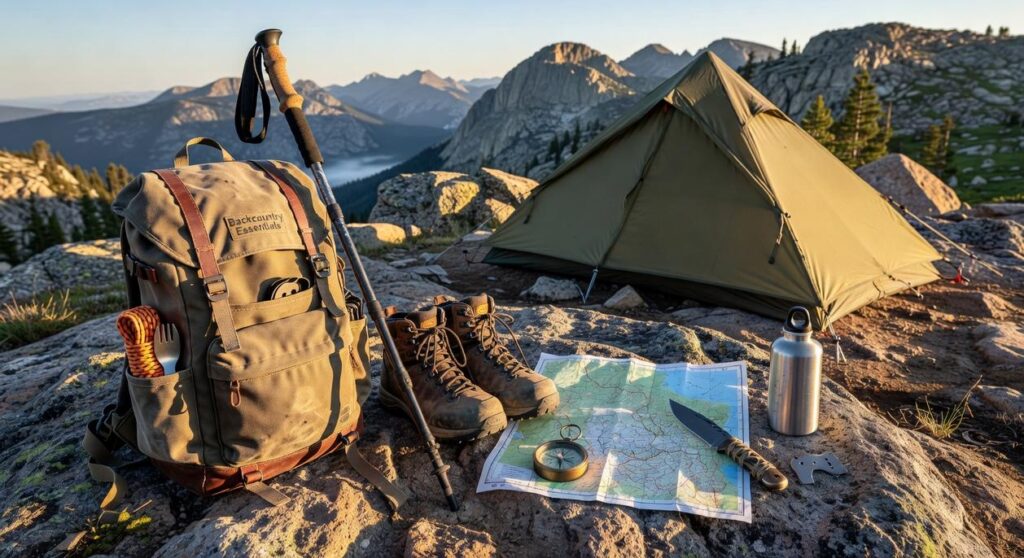
On my first true off-trail scouting trip, I trusted a GPS unit alone. Big mistake. Batteries die. Signals drift. Now, I carry a compass (a magnetic navigation tool that points to true north) and treat GPS as backup, not gospel. Likewise, footwear matters more than brand hype. Trail runners are great—until sharp scree and soaked tundra remind you why ankle support exists. A minimalist shelter setup—a lightweight tarp and bivy—keeps you mobile without turning your pack into a brick (your knees will thank you later).
The First Visit Mindset
At first, I approached new terrain like a conquest. I pushed too far, too fast. However, scouting isn’t about summiting—it’s about observing. Look for water sources, flat ground for camps, and wildlife sign. Fresh tracks and scat tell you who was there before you. Slow down. Take notes. The goal is information, not Instagram.
Reading the Landscape
Game trails often become natural pathways, but don’t assume they’re safe. I once followed one straight into dense brush and lost an hour backtracking. Instead, study drainage patterns. Low gullies can become flash-flood funnels after storms. Meanwhile, rock overhangs and dense tree clusters can offer natural shelter from wind.
Safety Protocols for Unknown Terrain
Some argue detailed trip plans are overkill. I disagree. Leave your route, timeline, and turnaround point with someone. Carry a satellite messenger. Most importantly, know when to turn back. Pride has stranded better hikers than you. Finally, if you’re interested in preserving secret outdoor spots, learn how to find lesser known hiking trails in popular regions: https://faticalawi.com.co/how-to-find-lesser-known-hiking-trails-in-popular-regions/.
Go beyond “Leave No Trace” with a Leave It Better mindset: pack out micro-trash (wrappers, caps) even if it isn’t yours. Bring a zip bag for debris—pro tip: keep one in your kit.
• The Ethics of Sharing: Geotagging fragile spots invites crowds and erosion. Share directions only within trusted circles and generalize locations online. Preserving secret outdoor spots requires restraint.
• Low-Impact Camping: Choose durable surfaces like rock or established sites. Bury human waste 6–8 inches deep at least 200 feet from water, and use existing fire rings. Avoid creating new fire pits or clearing vegetation unnecessarily at campsites.
Your Journey as a Steward of the Wild
You set out to find a way beyond crowded trails—and now you have a clear, practical path to do exactly that. With the right research habits and a respect-first mindset, you can escape the noise while actively protecting the landscapes you love. Overcrowding threatens the solitude and raw beauty that drew you outdoors in the first place, but your choices directly shape a better outcome. This approach works because preserving secret outdoor spots always comes before personal spotlight.
Take action today. Choose a national forest, open your map, and start exploring responsibly. Join thousands of outdoor enthusiasts who trust this proven method—begin your search now and help protect the wild places that need you most.
 Founder & CEO
Korlan Kovalde writes the kind of hidden gems content that people actually send to each other. Not because it's flashy or controversial, but because it's the sort of thing where you read it and immediately think of three people who need to see it. Korlan has a talent for identifying the questions that a lot of people have but haven't quite figured out how to articulate yet — and then answering them properly.
They covers a lot of ground: Hidden Gems, Gear Setup and Trail Tips, Frontier Findings, and plenty of adjacent territory that doesn't always get treated with the same seriousness. The consistency across all of it is a certain kind of respect for the reader. Korlan doesn't assume people are stupid, and they doesn't assume they know everything either. They writes for someone who is genuinely trying to figure something out — because that's usually who's actually reading. That assumption shapes everything from how they structures an explanation to how much background they includes before getting to the point.
Beyond the practical stuff, there's something in Korlan's writing that reflects a real investment in the subject — not performed enthusiasm, but the kind of sustained interest that produces insight over time. They has been paying attention to hidden gems long enough that they notices things a more casual observer would miss. That depth shows up in the work in ways that are hard to fake.
Founder & CEO
Korlan Kovalde writes the kind of hidden gems content that people actually send to each other. Not because it's flashy or controversial, but because it's the sort of thing where you read it and immediately think of three people who need to see it. Korlan has a talent for identifying the questions that a lot of people have but haven't quite figured out how to articulate yet — and then answering them properly.
They covers a lot of ground: Hidden Gems, Gear Setup and Trail Tips, Frontier Findings, and plenty of adjacent territory that doesn't always get treated with the same seriousness. The consistency across all of it is a certain kind of respect for the reader. Korlan doesn't assume people are stupid, and they doesn't assume they know everything either. They writes for someone who is genuinely trying to figure something out — because that's usually who's actually reading. That assumption shapes everything from how they structures an explanation to how much background they includes before getting to the point.
Beyond the practical stuff, there's something in Korlan's writing that reflects a real investment in the subject — not performed enthusiasm, but the kind of sustained interest that produces insight over time. They has been paying attention to hidden gems long enough that they notices things a more casual observer would miss. That depth shows up in the work in ways that are hard to fake.