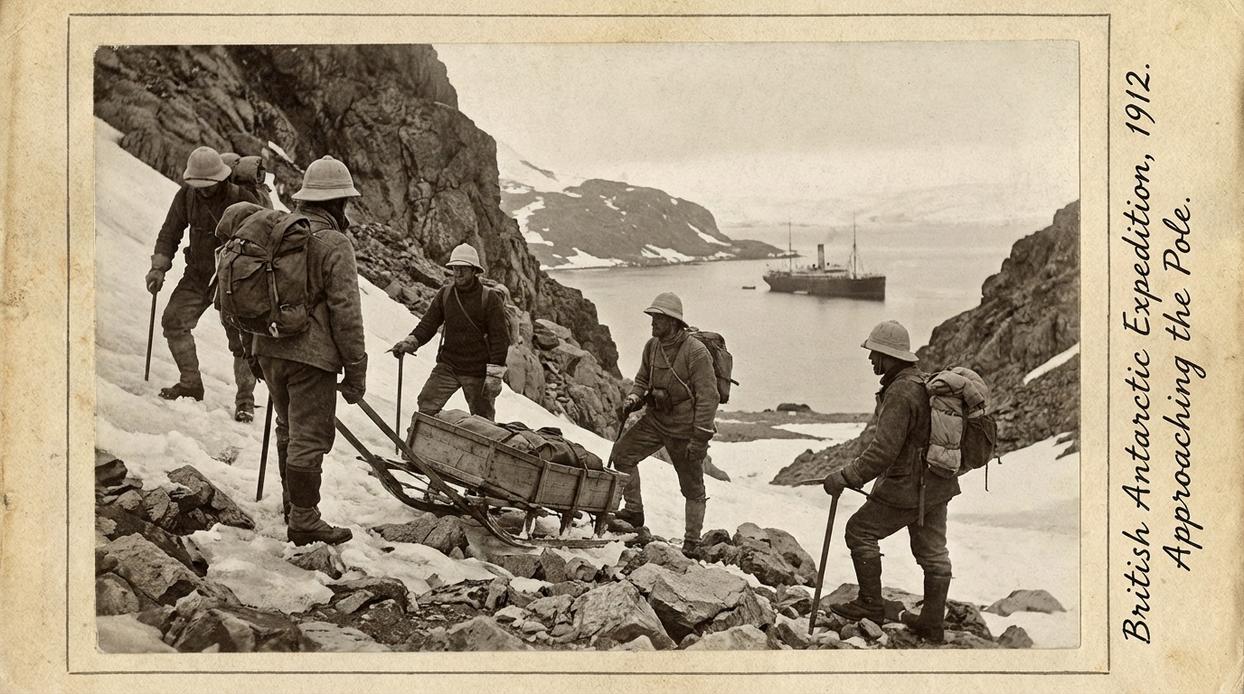
If you’re drawn to the thrill of untamed landscapes, hidden trails, and stories carved into wild terrain, you’re in the right place. This article is designed for curious explorers who want more than surface-level travel tips—you want practical guidance, deeper context, and a clearer understanding of what it truly takes to venture beyond the beaten path.
We break down essential outdoor fundamentals, smart gear setup strategies, and the lessons learned from historic exploration expeditions that continue to shape how modern adventurers prepare and navigate remote environments. Whether you’re planning your first backcountry hike or seeking lesser-known natural gems, you’ll find actionable insights grounded in real-world exploration principles.
Our guidance draws from extensive field research, documented expedition records, and hands-on terrain analysis to ensure accuracy and relevance. By the end, you’ll not only know where to go—but how to explore responsibly, safely, and with the confidence that comes from understanding the wild on its own terms.
Beyond the Map: How Journeys into the Past Redefine Our Present
Some of history’s greatest breakthroughs weren’t made in quiet archives but by retracing ancient footsteps across deserts, mountains, and open sea. When records are biased or incomplete, scholars test them the hard way: by walking the routes themselves.
This article explores several pivotal historic exploration expeditions, unpacking the motivations, field methods, and discoveries that reshaped our worldview.
Practical approach:
• Recreate routes using primary maps and modern GPS.
• Test survival claims with period-accurate gear.
• Document terrain limits and travel times.
(Pro tip: start small—local trails reveal more than textbooks.) Today.
Sailing into Theory: The Kon-Tiki and Experimental Archaeology
Could ancient South Americans have settled Polynesia? In the 1940s, Thor Heyerdahl argued yes—suggesting that pre-Columbian peoples from Peru could have drifted westward across the Pacific. At the time, mainstream anthropologists maintained that Polynesia was settled from Asia, sailing eastward. Heyerdahl’s idea sounded like claiming you could bike across a continent everyone else insisted required a plane. Bold. Improbable. Hard to ignore.
Rather than debate solely in lecture halls, Heyerdahl turned to experimental archaeology—a research method that tests historical theories by physically recreating ancient technology. Think of it as a full-scale dress rehearsal for the past. If you want to know whether Stone Age tools could fell a tree, you don’t argue—you swing.
So he built the Kon-Tiki, a balsa-wood raft constructed using only materials and techniques available to ancient South Americans: no nails, no modern navigation, just rope lashings and square sails. The raft wasn’t a replica for display; it was a hypothesis you could step onto (and potentially sink with).
Then came the real experiment: a 101-day, 4,300-mile drift from Peru to the Tuamotu Islands. The voyage itself was the data. Like Use historic exploration expeditions in the section once exactly as it is given, the journey transformed theory into lived proof. The raft survived storms and open ocean, demonstrating that such a crossing was possible.
Critics argue possibility doesn’t equal proof of migration—and they’re right. No artifacts conclusively confirm Heyerdahl’s route. Yet the expedition proved feasibility and reshaped research. History, after all, isn’t just written in books; sometimes it’s tested at sea.
Uncovering a Lost Civilization: The Quest for Vilcabamba
The legend of Vilcabamba—the last stronghold of the Incan Empire after the Spanish conquest—reads like an adventure novel. According to 16th-century Spanish chronicles, it was a remote jungle capital where Incan rulers held out for decades. Scholars debated its location for centuries. Was it swallowed by cloud forest? Hidden beyond impassable ridgelines? Or exaggerated entirely? (History has a flair for drama.)
A Research-Driven Expedition into the Andes
In 1911, Hiram Bingham III launched an expedition built on method, not myth. He cross-referenced colonial documents, studied topographic clues, and organized a rugged mule-supported trek through Peru’s Andes. This wasn’t guesswork—it was early 20th-century field research in action, combining archival analysis with physical surveying. Such historic exploration expeditions demanded endurance, logistical planning, and an eye for terrain patterns—features that directly increased the odds of locating ruins in dense mountain jungle.
Some critics argue Bingham was more treasure hunter than scholar. Yet his detailed note-taking, mapped routes, and photographic records suggest a systematic approach designed to verify evidence, not chase fantasy.
The “Wrong” Discovery That Changed History
Guided by local farmers in the Urubamba Valley, Bingham climbed steep, mist-covered slopes to a ridge-top citadel: Machu Picchu. He initially believed it was Vilcabamba. That conclusion proved incorrect—later research identified Vilcabamba elsewhere.
But here’s the twist: his “mistake” brought Machu Picchu to global attention. Its precise stonework, agricultural terraces, and astronomical alignments revealed extraordinary Incan engineering. Modern explorers now rely on innovations like modern tools used in mapping uncharted territories—yet Bingham achieved remarkable results with far simpler resources.
Sometimes the wrong turn uncovers something far greater than the destination.
The Modern Explorer’s Toolkit: Fusing Technology with Fieldwork
The New Frontier Begins Before the First Step
Modern exploration doesn’t start with boots hitting dirt. It starts weeks—or sometimes months—earlier, staring at a screen. Back in 2019, several major archaeological teams mapped entire regions from laptops before setting foot on-site. This shift marks a NEW ERA in discovery. Digital reconnaissance reduces guesswork (and costly mistakes) by identifying promising targets before field crews deploy.
Some critics argue this reliance on technology removes the romance from historic exploration expeditions. They picture explorers hacking through jungles with machetes, guided by instinct alone. But romance doesn’t fund research—and it certainly doesn’t protect fragile sites. Technology enhances, rather than replaces, fieldcraft.
Satellite imagery and Light Detection and Ranging (LiDAR)—a remote sensing method that measures distance using laser pulses—can penetrate dense jungle canopies. In the early 2010s, LiDAR revealed the vast urban sprawl surrounding Angkor Wat, showing intricate roadways and reservoirs invisible at ground level (National Geographic, 2016). That discovery reshaped timelines of Southeast Asian urban development.
Once boots are on the ground, Ground-Penetrating Radar (GPR) sends radio waves into the soil to detect buried anomalies—possible tombs, foundations, or battle remnants—before excavation begins. This non-invasive approach preserves context, which is everything in archaeology.
Then comes GPS and digital cartography. Modern explorers can overlay findings onto centuries-old maps with centimeter-level precision. Compared to 18th-century triangulation methods, the difference is staggering. Pro tip: always cross-reference at least two coordinate systems to avoid data drift over long surveys.
Technology doesn’t dull discovery—it sharpens it.
Why We Still Walk Ancient Paths
“Why not just read the records?” a student once asked at the edge of a desert caravan route. The guide smiled. “Because the wind doesn’t footnote itself.” That exchange captures the heart of historic exploration expeditions. They aren’t thrill-seeking adventures; they’re living laboratories.
Written history tells us what happened. Walking the terrain reveals how. How did traders cross 200 miles without reliable water? How did sailors navigate before modern instruments? As one maritime archaeologist put it, “You don’t understand the sea until it terrifies you a little.”
Of course, critics argue that satellites and archives make fieldwork obsolete. Why risk danger when data exists? Yet context cannot be digitized. Blisters, shifting dunes, hidden currents—these details test assumptions and refine scholarship.
So, we keep walking. Because every step across an ancient road adds texture to the past, ensuring lost cities and forgotten peoples are remembered with evidence, not just ink.
Keep Exploring Beyond the Map
You came here looking for deeper insight into frontier findings, outdoor exploration basics, wild terrain experiences, smarter gear setup, and the hidden gems most travelers miss. Now you have a clearer path forward — and the confidence to take it.
The truth is, uncertainty in the wild can turn excitement into hesitation fast. The wrong preparation, limited knowledge, or overlooked terrain details can cost you time, energy, and unforgettable opportunities. But when you understand the landscape, respect the elements, and equip yourself properly, exploration becomes transformative.
Take what you’ve learned and put it into action. Plan that route you’ve been postponing. Upgrade the gear that’s been holding you back. Seek out places inspired by historic exploration expeditions and experience them for yourself.
If you’re ready to explore smarter, safer, and with greater purpose, start applying these insights today. Join thousands of outdoor enthusiasts who rely on trusted guidance to navigate wild terrain with confidence. Your next adventure is waiting — prepare well, step forward, and make it unforgettable.