
If you’ve ever stood over a trail map feeling completely lost, or stared at a pile of gear unsure where to begin, you’re not alone. For many aspiring adventurers, the biggest obstacle isn’t strength or stamina — it’s uncertainty. The real barrier to enjoying the outdoors is a lack of beginner wilderness confidence, not physical fitness. After years spent guiding first-time hikers from hesitation to self-reliance in unpredictable terrain, one truth stands out: confidence is built, not born. This article delivers a practical, step-by-step framework to help you develop lasting skills and the self-trust needed to explore the wild with assurance.
The Mental Blueprint for Outdoor Self-Reliance
Outdoor confidence isn’t built in a single epic trek. Instead, it starts small and stacks upward. Psychologists call this progressive challenge—gradually increasing difficulty so your brain logs repeated wins. For example, begin with a well-marked local trail before attempting a remote backcountry route. Each success becomes evidence that you can handle more (and your brain loves evidence).
At the same time, remember that uncertainty—not danger itself—is what fuels most outdoor anxiety. When you don’t know how to solve a problem, your imagination fills in the worst-case scenario. Knowledge changes that. If you know how to read a map, purify water, or set up shelter, fear shrinks to a manageable size. In other words, skills replace guesswork.
Next, reframe “what-if” thinking. Preparedness isn’t pessimism; it’s pre-decision making. “What if it rains?” becomes “I’ll pack my rain jacket.” That shift turns vague worry into a clear action step.
Of course, mistakes will happen. You might misjudge distance or forget extra socks. Rather than labeling that failure, treat it as field data. Experience is built through feedback. Even Luke Skywalker trained before facing the galaxy. That’s how beginner wilderness confidence becomes lasting self-reliance.
Core Skill #1: Mastering Your Immediate Environment
In 2020, when local parks briefly closed and people were stuck at home, many first-time adventurers realized something surprising: you don’t need deep wilderness to build real skill. You need repetition.
The 10-Minute Debris Hut
Set a timer for ten minutes. Use only what’s around you—fallen branches, leaves, lawn clippings. A debris hut (a simple shelter made from natural materials) teaches insulation and structure fast. The goal isn’t perfection; it’s proof. After three or four practice rounds in your backyard, you’ll notice your hands move faster and your eye spots better materials automatically. That shift builds beginner wilderness confidence because you’ve tested yourself in low-stakes conditions.
Some argue this is “just pretend survival.” But skill is skill. The brain doesn’t care whether the storm is real; it remembers the reps (like running drills before the big game).
Creating Fire with Certainty
Fire runs on the fire triangle:
- Fuel (something to burn)
- Heat (a spark or flame)
- Oxygen (airflow)
Practice first with stormproof matches or a ferro rod in a controlled setting. Back in 2019, survival schools reported most beginners failed not from lack of sparks—but from poor tinder prep (National Outdoor Leadership School field notes). Master your tinder, and the rest follows. Pro tip: prepare twice as much as you think you need.
Water Wisdom: The Easiest Survival Win
Modern filters and purification tablets remove bacteria and protozoa reliably (CDC guidelines). Learn to use one properly, and you eliminate a major fear factor. Confidence often comes down to clean water and a dry place to sleep. Everything else is refinement.
Core Skill #2: Navigating with Certainty
Your Map Is Your Best Friend
A topographic map is a scaled drawing of terrain using contour lines—curved lines that show elevation. When lines are close together, the slope is steep; when spaced apart, it’s gentle (think stair steps vs. a wheelchair ramp). Symbols mark trails, water sources, and camps. Many guides stop there. Here’s what they miss: always orient your map. Place your compass on it, rotate until the magnetic needle aligns with north, then turn the map to match. Now the paper reflects reality.
Look Up and Around
Natural “handrails” are large features that guide movement—ridgelines, streams, even a distant peak. If you keep a creek on your left, you’ll know if you drift. The sun’s arc also helps; it rises roughly east and sets west (season matters). This builds beginner wilderness confidence because you’re navigating actively, not passively.
The S.T.O.P. Method
Lost? Stop. Think. Observe. Plan. Stopping lowers panic (which clouds judgment). Think about your last confirmed location. Observe landmarks, sounds, slope direction. Plan a short, deliberate move.
Pro tip: mark your start point on the map before hiking.
Before heading out, review this beginners guide to planning your first outdoor adventure for preparation basics that many overlook.
Gear That Builds Trust, Not Just Weight
Beyond the Checklist: The “Why” of the 10 Essentials
The 10 Essentials (a standard safety system for hikers) aren’t random items—they’re solutions to predictable problems. Navigation tools solve getting lost. Extra insulation solves sudden cold snaps. Illumination solves being caught out after dark. A first-aid kit solves minor injuries before they become trip-ending ones. Fire starters, repair kits, nutrition, hydration, and emergency shelter each answer a simple question: What if this goes wrong? Think of them as a pre-packed safety net (not just extra ounces in your bag).
Your Personal Confidence Kit
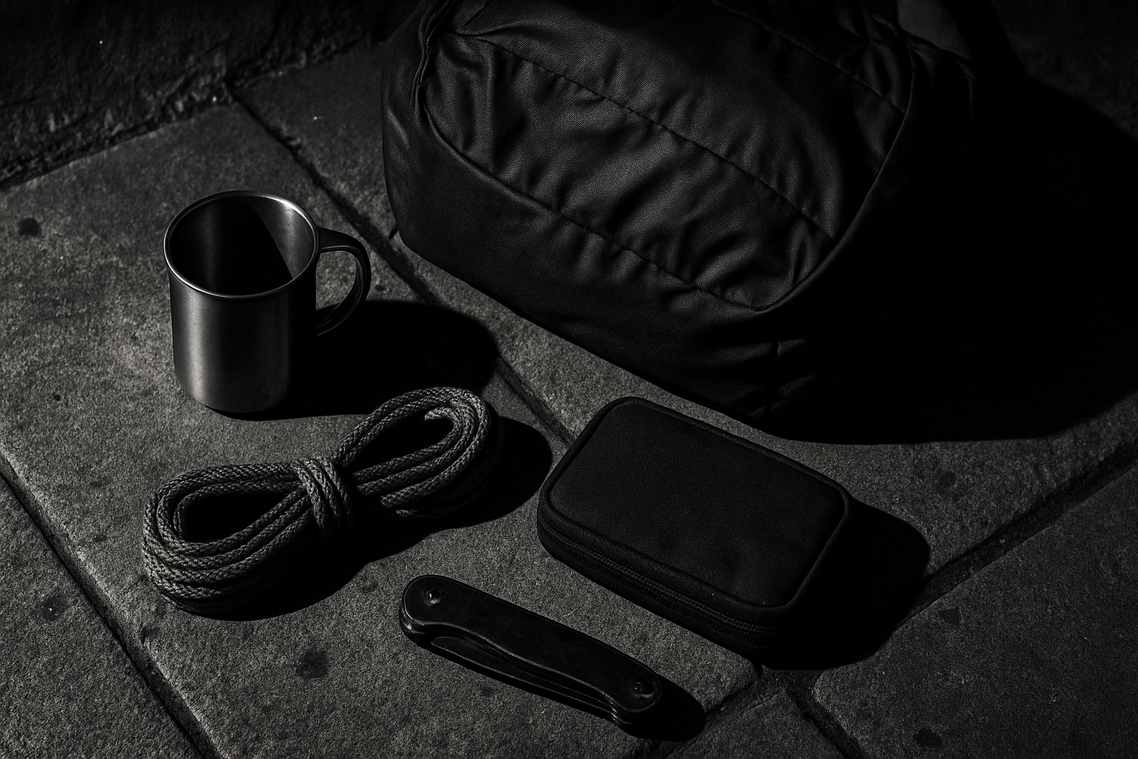
Create a small, accessible pouch with a reliable knife, loud whistle, compact first-aid kit, and backup fire starter. This is your quick-grab layer of security. Keep it reachable, not buried. That accessibility builds beginner wilderness confidence.
Practice with Your Gear
Owning gear isn’t the same as knowing it. Set up your tarp in the yard. Boil water on your stove before your first trip. Familiarity turns tools into trust (and panic into process).
Your First Step on the Path to Adventure
You don’t wake up with beginner wilderness confidence — you build it. If hesitation or fear of the unknown has been holding you back, that’s normal. Every capable explorer once stood exactly where you are now.
The difference isn’t talent. It’s preparation, knowledge, and deliberate practice. When you understand your gear, read a map, and plan ahead, uncertainty turns into clarity.
This week, choose one skill — like practicing map reading at a local park — and commit to it. Small action creates real momentum.
Stop waiting to feel ready. Start building the skills that make you ready. Take your first step today.