Ever find yourself drowning in options, lost in a sea of camping gear? You’re not alone. The lure of the outdoors is strong, but figuring out what you actually need can make you want to pull your hair out.
So many gadgets, so little clarity. Here’s the thing: you don’t need a truckload of gear to enjoy your time under the stars. You just need the right stuff.
I’ve spent years out there, battling the elements, learning what works and what’s just dead weight. I know firsthand the frustration of carrying useless junk on a hike. It’s why I’m sharing this no-nonsense guide.
This isn’t about shiny new gadgets. It’s about beginner camping gear you can actually rely on. So, let’s cut through the clutter.
This guide promises to arm you with a field-tested checklist that will set the foundation for safe, memorable adventures. Trust me, you’ll thank yourself later.
The ‘Big Three’: Your Core Survival System
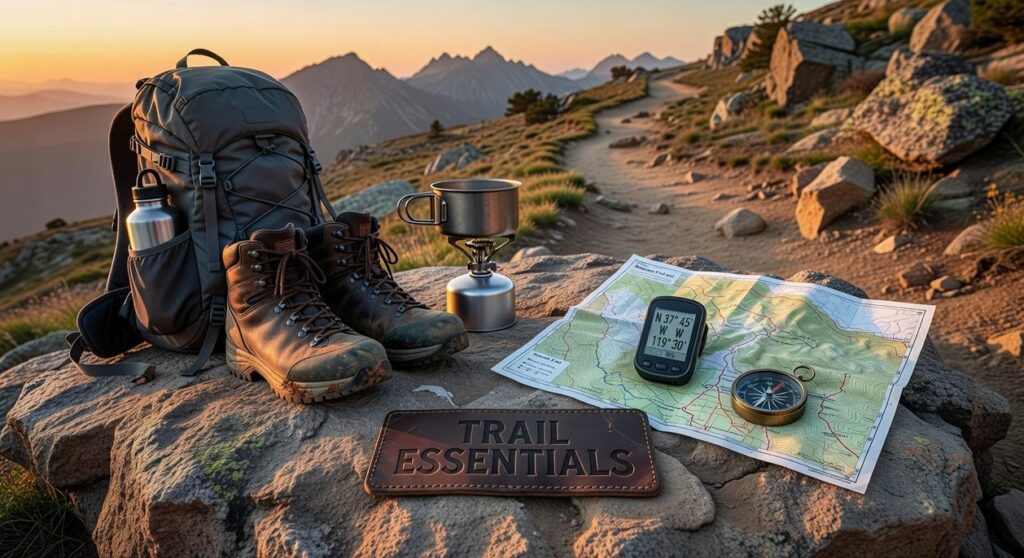
Camping, especially for beginners, boils down to three essentials. Think of them as your survival trifecta: shelter, sleep system, and pack. This is the core of any real adventurer’s kit.
First off, shelter. A simple two-person freestanding tent is a godsend for newbies. It’s easy to set up and reliable in a pinch.
You want something with seams that are sealed and a rainfly that covers it all. Trust me, nothing’s worse than waking up soaked. Sure, tarps or hammocks are intriguing, but save those for later when you’ve got the basics down.
Now, let’s talk sleep systems. Two key parts: a sleeping bag and a pad. Bag ratings can be confusing.
A 30°F bag? Use it when nights dip to 30°F. Seems obvious, but I once froze because I didn’t get that right.
The sleeping pad isn’t just for comfort. It’s your insulation from the cold ground, a mistake I learned the hard way.
Finally, backpacks. Forget about flashy features. The right fit is everything.
If you can, get fitted at a store. For short trips, aim for a 40-60 liter pack. Here’s a novice tip: load your heaviest items in the middle, near your spine.
Better balance equals better hikes.
And speaking of hikes, if you’re interested in packing light day hikes, it’s a game changer.
Beginner camping gear doesn’t have to be daunting. Stick to the Big Three. Nail these essentials, and you’re halfway to surviving the wild.
Of course, as you grow more adventurous, there’s always more gear to explore. But those are stories for another campfire.
Fueling the Adventure: Camp Kitchen & Hydration Basics
When you hit the trail, survival gear is just the start. Sustenance is where the real adventure lies. Ever tried cooking over a campfire?
It’s romantic and all, but a simple stove system beats it every time. I swear by my small canister stove. It’s reliable and easy to use, unlike wrestling with firewood.
Here’s the deal: pack a stove, a small fuel canister, one pot (about a liter), and a long-handled spoon or spork. That’s all you need.
Let’s talk food. Keep it basic. Dehydrated pouches, oatmeal, and ramen are your friends.
They’re easy and quick. But here’s the thing. You need to pack out all your food scraps.
Yes, even peels and cores. It’s called “Leave No Trace,” and it’s key for keeping wildlife safe. If you leave scraps, you’ll attract animals.
And that’s bad news for both them and you.
Hydration is non-negotiable. Seriously, don’t mess around with this. Carry water bottles or a bladder, but more importantly, have a solid way to treat more water.
A squeeze filter is fast and easy. Purification tablets? They’re a lightweight backup.
You might think a clear stream is safe. It’s not. Treat everything.
There’s more to know about best camping gear for beginners, but hydration tops the list.
By the way, if you think beginner camping gear is just for newbies, think again. Even seasoned campers need to refresh their gear sometimes. So, what’s in your kit?
Staying Found & Safe: Gear for Peace of Mind
When you’re out there (far from the comforts of home), having the right gear can make a world of difference. Let’s talk about the peace of mind kit. It’s not about being paranoid; it’s about being prepared.

First, let’s explain the situation. I swear by a headlamp over a flashlight. Why?
Because you want your hands free for everything else. I once found myself scrambling over rocks in the dark, and the headlamp was a lifesaver. Just remember to pack extra batteries and always check that it’s working before you leave.
Next up, navigation. Call me old-fashioned, but a map and compass are non-negotiable. They never run out of batteries.
Sure, a GPS device or your phone with downloaded maps is handy and should be part of your kit (just don’t rely solely on them). A power bank is a must if you’re going digital. And while you’re at it, get familiar with understanding trail markings hiking.
Now, let’s talk first-aid. Those bulky pre-made kits? Leave them.
Go with a small, personalized kit. Focus on blister care, assorted bandages, antiseptic wipes, pain relievers, and any personal meds you need. I learned the hard way when a tiny blister turned into a trip-ender.
Finally, a solid knife or multi-tool. You don’t need anything fancy. A simple lock-blade knife is perfect for beginner camping gear.
Whether you’re cutting cord, repairing gear, or prepping food, you’ll find a hundred uses for it.
In the end, having the right gear turns potential emergencies into mere inconveniences. Stay safe out there.
Dress to Survive: The Art of Smart Camping Gear
Forget fashion. When you’re out in the wild, survival trumps style. You need to stay warm, dry, and protected.
The first rule? No cotton! You might think it’s cozy, but when wet, cotton sucks. It holds moisture and loses all insulation. That can lead to hypothermia.
So, when dealing with beginner camping gear, cotton is your enemy.
Now, let’s talk layers. Start with a moisture-wicking base layer. Go for synthetic or wool.
Wool is my pick. It’s like magic: keeps you dry and warm. Next, the insulating mid-layer.
Fleece or a puffy jacket works wonders. Finally, top it with a waterproof outer shell. Pick a solid rain jacket. (A good one makes all the difference.)
Don’t forget your feet! Sturdy, broken-in hiking boots are key. They protect your feet and last longer than trendy shoes.
And always pack extra socks. Wool or synthetic, not cotton. Trust me, dry feet are happy feet.
Lastly, pack the essentials. Sunscreen, insect repellent, a trowel, and biodegradable soap. These might seem small, but they make a difference.
Camping’s not a fashion show. It’s about smart choices and staying safe. That’s the real adventure.
Ready to Hit the Trail?
Feeling swamped by gear choices? You’re not alone. But that’s part of the thrill, isn’t it?
Starting off can feel like a maze. But this important list of beginner camping gear cuts through the noise. It’s your map, built on experience, to keep you safe and comfy out there.
So what’s next? Grab this checklist. Build confidence.
Choose that destination you’ve been eyeing. Pack your bag. Step into the wild.
The adventure is yours for the taking. Want proof? Others have done it.
Now it’s your turn. Ready to conquer the wilderness? Let’s get started.
 Lead Explorer & Content Specialist
Ann Wootenutter writes the kind of alawi wilderness navigation content that people actually send to each other. Not because it's flashy or controversial, but because it's the sort of thing where you read it and immediately think of three people who need to see it. Ann has a talent for identifying the questions that a lot of people have but haven't quite figured out how to articulate yet — and then answering them properly.
They covers a lot of ground: Alawi Wilderness Navigation, Frontier Findings, Gear Setup and Trail Tips, and plenty of adjacent territory that doesn't always get treated with the same seriousness. The consistency across all of it is a certain kind of respect for the reader. Ann doesn't assume people are stupid, and they doesn't assume they know everything either. They writes for someone who is genuinely trying to figure something out — because that's usually who's actually reading. That assumption shapes everything from how they structures an explanation to how much background they includes before getting to the point.
Beyond the practical stuff, there's something in Ann's writing that reflects a real investment in the subject — not performed enthusiasm, but the kind of sustained interest that produces insight over time. They has been paying attention to alawi wilderness navigation long enough that they notices things a more casual observer would miss. That depth shows up in the work in ways that are hard to fake.
Lead Explorer & Content Specialist
Ann Wootenutter writes the kind of alawi wilderness navigation content that people actually send to each other. Not because it's flashy or controversial, but because it's the sort of thing where you read it and immediately think of three people who need to see it. Ann has a talent for identifying the questions that a lot of people have but haven't quite figured out how to articulate yet — and then answering them properly.
They covers a lot of ground: Alawi Wilderness Navigation, Frontier Findings, Gear Setup and Trail Tips, and plenty of adjacent territory that doesn't always get treated with the same seriousness. The consistency across all of it is a certain kind of respect for the reader. Ann doesn't assume people are stupid, and they doesn't assume they know everything either. They writes for someone who is genuinely trying to figure something out — because that's usually who's actually reading. That assumption shapes everything from how they structures an explanation to how much background they includes before getting to the point.
Beyond the practical stuff, there's something in Ann's writing that reflects a real investment in the subject — not performed enthusiasm, but the kind of sustained interest that produces insight over time. They has been paying attention to alawi wilderness navigation long enough that they notices things a more casual observer would miss. That depth shows up in the work in ways that are hard to fake.