
If you’re searching for practical guidance on exploring wild terrain, uncovering lesser-known destinations, and preparing properly for outdoor adventures, you’re in the right place. Many explorers crave more than crowded viewpoints and marked trails—they want real experiences, deeper connection, and the confidence to venture further.
This article is designed to help you navigate the essentials of outdoor exploration, from understanding frontier findings to mastering gear setup and embracing raw landscapes safely. Whether your goal is discovering secluded natural spots or building the skills to travel beyond the beaten path, you’ll find clear, experience-backed insights to guide you.
Our recommendations are grounded in hands-on field research, tested gear strategies, and careful analysis of diverse terrains and conditions. Every tip is shaped by real-world outdoor challenges and lessons learned in remote environments—so you can explore smarter, safer, and with a stronger sense of adventure.
Beyond the Crowds: Your Guide to Finding True Solitude in Nature
If you’ve hiked to a “hidden” waterfall only to find a line for photos, you know the frustration. Popular trails feel like theme parks (minus the churros). Real solitude shouldn’t require a reservation.
After years of off-trail miles, I’ve learned it’s not luck—it’s method. You’ll learn:
- How to research maps beyond top search results
- What gear supports safe, low-traffic routes
- The mindset required to turn back when needed
This guide delivers practical tools for discovering secluded natural spots and stepping confidently beyond the beaten path alone.
The Mindset of a Wilderness Explorer: Thinking Differently

First, redefine what a “destination” really means. Instead of chasing famous parks or named trails, think in terms of ecosystems—watersheds, mountain ranges, desert basins. An ecosystem is a community of living organisms interacting with their environment. When you explore the Greater Yellowstone Ecosystem rather than just Yellowstone National Park, you unlock quieter trailheads, varied terrain, and fewer crowds (yes, even in peak season). The benefit? More authentic, self-directed adventure.
Next, embrace discomfort. Solitude often waits just beyond the average comfort threshold—a steeper ascent, an unpaved access road, an extra three miles on foot. In outdoor recreation studies, visitor density consistently drops as trail difficulty increases. That challenge becomes your filter.
Finally, master the art of observation. Look for “signs of quiet”: limited geotags, sparse online reviews, complicated access points. These friction points discourage casual visitors. Pro tip: cross-reference topographic maps with low-tag areas when discovering secluded natural spots. Quiet is rarely advertised—but it leaves clues.
Mastering Digital Scouting from Your Desk
You don’t need to burn gas to find adventure. With digital topo platforms like CalTopo and Gaia GPS, you can analyze contour lines (the thin lines that show elevation changes) to spot hidden valleys, saddles, and unnamed high points. Tight contour spacing signals steep terrain; wide spacing hints at meadows or gentle basins. A north-facing bowl with a nearby water source? That’s often cooler, greener, and less traveled (for obvious reasons).
Satellite layers add another dimension. Toggle between topo and imagery to assess tree density, avalanche paths, burn scars, and potential campsites. Dark green patches often indicate dense forest cover, while lighter tones may reveal clearings or alpine tundra. Look for faint game trails or old fire roads that don’t appear on standard maps. Pro tip: cross-reference historical wildfire layers—burn zones from 5–10 years ago frequently open up sweeping views and wildflower growth (U.S. Forest Service data confirms post-fire regeneration cycles).
Then go beyond the postcard zones. National Forest and BLM (Bureau of Land Management) lands often border major parks but see far fewer visitors because they lack marketing and paved trailheads. The benefit? Fewer crowds, dispersed camping options, and more freedom for discovering secluded natural spots.
Finally, refine your search terms. Skip “best hikes.” Try:
- “[Region] forest service roads”
- “[Mountain Range] cross-country route”
- “[River Name] headwaters”
These phrases surface trip reports, old route notes, and overlooked terrain. Think of it as digital prospecting—except instead of gold, you’re finding silence.
Essential Gear and Skills for Quiet Exploration
Going off-trail isn’t about packing more. It’s about packing smarter. A lightweight, durable kit keeps you mobile while ensuring you’re prepared when the unexpected happens (and it will).
The “Go-Anywhere” Gear Setup
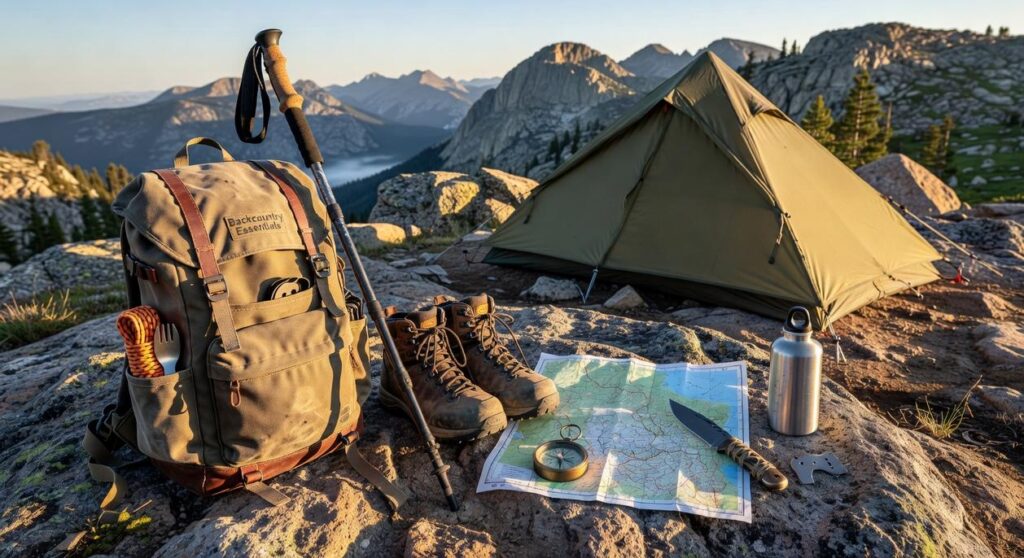
Focus on tools that deliver maximum function per ounce:
- Map and compass (non-battery navigation you can trust)
- Handheld GPS device for coordinate verification
- Reliable water filter rated to remove bacteria and protozoa (like Sawyer or LifeStraw systems)
- Comprehensive first-aid kit with trauma bandage and blister care
- Personal locator beacon (PLB) registered with NOAA for emergency rescue
Each item earns its place by increasing self-reliance. A PLB, for example, can transmit your coordinates via satellite when cell service is nonexistent—dramatically reducing rescue time in life-threatening scenarios (NOAA, 2023).
For deeper preparation, review safety considerations when visiting remote hidden locations: https://faticalawi.com.co/safety-considerations-when-visiting-remote-hidden-locations/
Navigation Is Non-Negotiable
Off-trail navigation means understanding contour lines (the squiggly map lines that show elevation change), identifying ridgelines and drainages, and using a compass to follow a bearing. If you can’t orient the map to terrain, you’re guessing—and guessing gets expensive fast.
Self-Sufficiency Basics
When discovering secluded natural spots, assess water clarity, flow rate, and upstream hazards before filtering. Study local weather patterns; mountain systems can shift hourly. Finally, practice basic risk assessment: ask what happens if you twist an ankle here. If the answer is “no one finds me,” adjust your plan.
(Pro tip: Redundancy in navigation—map plus compass plus GPS—covers 99% of failure scenarios.)
Pristine places are different. They look invincible, but they’re anything but. Alpine meadows, desert arches, and hidden coves operate on tight ecological margins; one careless bootprint can linger for years. The Leave No Trace principles—guidelines for minimizing human impact—aren’t suggestions here. They’re rules. I believe that if you’re lucky enough to experience discovering secluded natural spots, you accept the responsibility to protect them.
Going beyond packing out trash means resisting the urge to build cairns (those stacked-rock trail markers), camping only on durable surfaces like rock or gravel, and burying human waste at least 200 feet from water sources, as recommended by the Leave No Trace Center for Outdoor Ethics.
- Tread lightly.
- Think long term.
I’ll say it plainly: silence is stewardship. Posting exact locations on social media can love a place to death. Some argue sharing inspires conservation. Sometimes it does. But in fragile terrain, restraint works.
Your Next Quiet Adventure Awaits
Now you have a complete toolkit—from digital scouting to backcountry basics—to start discovering secluded natural spots with confidence. In a world where trailheads overflow and “hidden gems” trend on social media, true solitude can feel impossible. Yet with a methodical, skill-based approach, you’re no longer relying on luck. Instead, you can read maps, assess terrain, and plan smarter routes.
The benefit? More silence, safer outings, and experiences that feel genuinely yours (not borrowed from someone else’s feed). So pick a local region, open a map, and begin planning your first wilderness escape today right now.
Take Your Next Step Into the Wild
You set out to learn how to explore smarter, prepare better, and experience the outdoors on a deeper level—and now you have the foundation to do exactly that. From understanding essential gear setup to navigating untamed landscapes and discovering secluded natural spots, you’re better equipped to step beyond crowded trails and into truly rewarding terrain.
The real frustration was never a lack of desire—it was not knowing where to start or how to explore safely and confidently. That gap is now closed. You understand what it takes to move from casual outings to intentional wild terrain experiences.
But knowledge only matters if you use it.
If you’re ready to stop settling for overcrowded destinations and start experiencing raw, unforgettable landscapes, now is the time to act. Explore our expert-backed outdoor guides, proven gear recommendations, and curated hidden gems trusted by thousands of outdoor enthusiasts. Don’t let another season pass wishing you had gone further.
Start planning your next adventure today and turn preparation into experience.
 Lead Explorer & Content Specialist
Ann Wootenutter writes the kind of alawi wilderness navigation content that people actually send to each other. Not because it's flashy or controversial, but because it's the sort of thing where you read it and immediately think of three people who need to see it. Ann has a talent for identifying the questions that a lot of people have but haven't quite figured out how to articulate yet — and then answering them properly.
They covers a lot of ground: Alawi Wilderness Navigation, Frontier Findings, Gear Setup and Trail Tips, and plenty of adjacent territory that doesn't always get treated with the same seriousness. The consistency across all of it is a certain kind of respect for the reader. Ann doesn't assume people are stupid, and they doesn't assume they know everything either. They writes for someone who is genuinely trying to figure something out — because that's usually who's actually reading. That assumption shapes everything from how they structures an explanation to how much background they includes before getting to the point.
Beyond the practical stuff, there's something in Ann's writing that reflects a real investment in the subject — not performed enthusiasm, but the kind of sustained interest that produces insight over time. They has been paying attention to alawi wilderness navigation long enough that they notices things a more casual observer would miss. That depth shows up in the work in ways that are hard to fake.
Lead Explorer & Content Specialist
Ann Wootenutter writes the kind of alawi wilderness navigation content that people actually send to each other. Not because it's flashy or controversial, but because it's the sort of thing where you read it and immediately think of three people who need to see it. Ann has a talent for identifying the questions that a lot of people have but haven't quite figured out how to articulate yet — and then answering them properly.
They covers a lot of ground: Alawi Wilderness Navigation, Frontier Findings, Gear Setup and Trail Tips, and plenty of adjacent territory that doesn't always get treated with the same seriousness. The consistency across all of it is a certain kind of respect for the reader. Ann doesn't assume people are stupid, and they doesn't assume they know everything either. They writes for someone who is genuinely trying to figure something out — because that's usually who's actually reading. That assumption shapes everything from how they structures an explanation to how much background they includes before getting to the point.
Beyond the practical stuff, there's something in Ann's writing that reflects a real investment in the subject — not performed enthusiasm, but the kind of sustained interest that produces insight over time. They has been paying attention to alawi wilderness navigation long enough that they notices things a more casual observer would miss. That depth shows up in the work in ways that are hard to fake.