If you’re searching for practical guidance on exploring wild terrain, discovering hidden gems, and building confidence in the outdoors, you’re in the right place. This article is designed to help you navigate frontier findings, master the basics of exploration, and approach every trip with clarity and purpose. Whether you’re new to the trail or refining your outdoor adventure planning, you’ll find actionable insights that turn uncertainty into preparation.
We’ve analyzed field-tested techniques, consulted experienced explorers, and reviewed real-world gear setups to ensure the advice here is grounded in hands-on experience—not theory. The goal is simple: give you reliable, straightforward information that helps you prepare smarter, travel safer, and experience more of what the wild has to offer.
From essential gear configurations to overlooked destinations worth the trek, this guide aligns with your search for practical, trustworthy outdoor knowledge you can apply on your very next adventure.
Your Blueprint for Unforgettable Outdoor Adventures
A perfectly executed trip feels effortless: the right gear, clear skies, and a trail that matches your skill level. In contrast, a poorly planned outing means forgotten headlamps, surprise storms, and that sinking “we should’ve checked” moment. The difference, however, isn’t luck; it’s preparation. Many trips fail not because hiking or paddling is hard, but because the plan is vague. So let’s clarify. Outdoor adventure planning simply means turning an idea—“Let’s camp this weekend”—into specific steps: research terrain, check forecasts, map routes, pack intentionally, and set backup options. Follow this framework, and confidence replaces chaos. Every detail now has purpose.
Phase 1: Defining Your Mission and Destination
Every successful trip starts with clarity. Not vibes. Not guesswork. Clarity.
Assess Your Skill & Fitness Level
Be honest about your capacity. According to the American Alpine Club, overexertion and poor conditioning contribute significantly to backcountry search and rescue incidents (AAC Accident Report). Ambition is admirable; overconfidence is expensive.
Ask:
- Can everyone hike the planned mileage with elevation gain?
- Has anyone trained with a loaded pack?
- Do you have navigation experience beyond marked trails?
A beginner group attempting a 14er because it “looked cool on Instagram” is how rescues happen (and friendships get tested).
Match the Activity to the Season
Season dictates risk. Spring thaws create unstable snow bridges. Summer heat increases dehydration risk; the CDC reports thousands of heat-related illnesses annually. Wildfire season can shut down entire trail systems.
Research local patterns before committing. Weather is not a suggestion; it’s a variable.
Researching Locations
Use digital tools like AllTrails and Gaia GPS for route data and reviews. Cross-check with guidebooks and topographic maps to understand elevation profiles and water sources. Redundancy in outdoor adventure planning reduces navigation errors.
Clarify Your Objective
Are you training endurance? Seeking wildlife photography? Or prioritizing relaxation? Your objective determines pace, terrain, and gear. A photography trip means slower movement and heavier packs. A conditioning hike means steady mileage.
Define the mission first. The destination follows.
Phase 2: Building Your Logistics and Safety Net
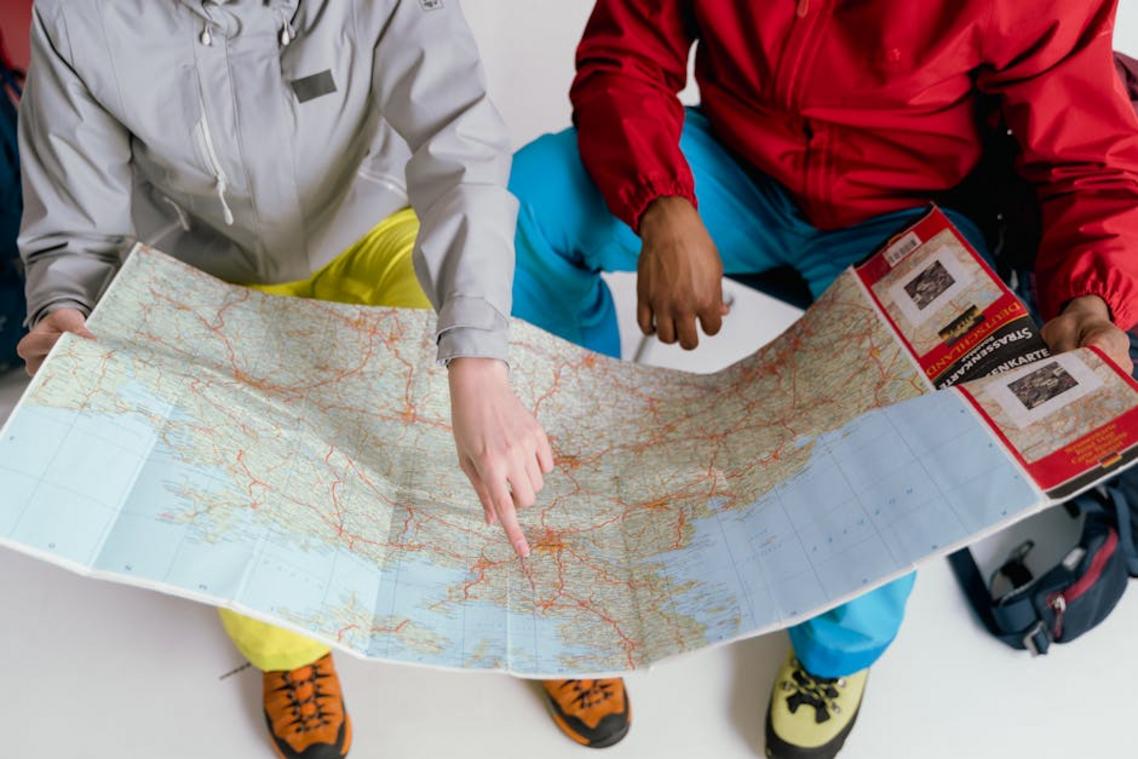
Great trips aren’t improvised—they’re engineered. Think of this phase as the difference between a casual stroll and a mission-ready expedition (Indiana Jones had a map for a reason).
Mastering Your Route
Route planning comes down to segmentation—breaking a long trail into smaller, achievable sections. Segment A vs. Segment B thinking helps: 8 miles with two water sources and bailout access vs. 12 dry miles with no exit. Which gives you margin? Identify:
- Reliable water sources (rivers, springs, seasonal creeks)
- Potential campsites with natural wind protection
- Critical bailout points (road crossings or ranger stations)
A “bailout point” is a pre-identified exit where you can safely leave the trail if conditions deteriorate. Some argue detailed planning kills spontaneity. But calculated structure actually creates freedom—you can adapt confidently because you understand the terrain.
Advanced Weather Forecasting
Basic app check vs. pattern analysis: the first tells you today’s temperature; the second shows incoming pressure systems and microclimates (localized weather patterns shaped by elevation or terrain). A valley can be calm while a ridgeline faces 40 mph gusts. Plan for worst-case, not best-case.
The Trip Plan Protocol
Leave a written itinerary including:
- Who is going
- Exact route and camps
- Return time
- Emergency contact steps
No return by X time = call authorities.
Some say this is excessive. It’s not—it’s responsible outdoor adventure planning.
Permits and Regulations
Permit vs. no-permit zones differ in quotas and oversight. Always check land use rules, fire restrictions, and Leave No Trace principles (ethics minimizing environmental impact). Pro tip: screenshot regulations in case signal drops. Safety isn’t dramatic—it’s deliberate.
Phase 3: Assembling Your Gear and Sustenance
The Core Gear System
First, let’s talk about the Big Three: your shelter, sleep system, and backpack. These three items usually make up the bulk of your pack weight, so choose wisely. A sleep system (your sleeping bag and sleeping pad) determines how well you recover each night. In my opinion, people obsess over ultralight tents but underestimate how miserable a bad night’s sleep can be (and misery compounds fast). Match your shelter to the forecast and terrain—humid forests demand ventilation, while alpine routes call for wind stability. And yes, your pack should fit after you finalize the other two, not before. Pro tip: visit a gear shop and load the pack with weight before buying.
The Ten Essentials Checklist
Next, the Ten Essentials—navigation tools, headlamp, sun protection, first-aid kit, knife, fire starter, shelter, extra food, extra water, and extra layers—are non-negotiable. Some argue smartphones replace maps and compasses. I disagree. Batteries die. Signals vanish. Paper doesn’t. Redundancy isn’t paranoia; it’s preparation (just ask anyone who’s taken a wrong turn at dusk).
Dressing for Success with Layering
When it comes to clothing, think in layers: base layer (moisture-wicking), mid-layer (insulation), and shell layer (weather protection). This system regulates body temperature by trapping or releasing heat as conditions shift. Before trips, I always review understanding weather patterns before you hit the trail (https://faticalawi.com.co/understanding-weather-patterns-before-you-hit-the-trail/) because guessing wrong about rain or wind can undo even the best layering strategy.
Fueling Your Body
Finally, food and water. Aim for calorie-dense options like nuts, dried fruit, and dehydrated meals—lightweight but powerful. Plan roughly 2,500–4,500 calories daily depending on exertion (National Park Service guidance). For water, calculate about half a liter per hour of moderate hiking. Filters remove bacteria and protozoa, purifiers handle viruses, and tablets offer lightweight backups. Smart outdoor adventure planning means treating hydration as seriously as navigation.
The last 24 hours before a trip always feel electric. I once skipped a final stove test and ate cold oats for two days (lesson learned).
The Gear Shakedown: Lay everything out, check zippers, test headlamps, and confirm fuel levels.
Final Weather and Conditions Check: Review forecasts and trail alerts; mountains change moods fast.
Confirm Your Safety Plan: Text your emergency contact your route and start time.
Pack and Weigh: Load heavier items close to your spine, adjust straps, and step on the scale.
This small ritual anchors outdoor adventure planning and prevents misery.
Pro tip: photograph your packed kit.
Start with an anecdote about getting lost on a foggy trail. I once set out without a map and paid for it with cold, miserable hours. That mistake taught me that outdoor adventure planning turns anxiety into ANTICIPATION. When you define your mission, build a safety net, and dial in your gear, you earn freedom.
• Define the goal.
• Pack redundancies.
• Check the weather twice.
Some argue spontaneity is the real adventure (and sure, it feels cinematic). But I’ve found preparation lets you actually ENJOY the journey instead of surviving it. Use this framework next time and feel the difference fully.
As you embark on planning your first outdoor adventure, discovering unique destinations like Lake Faticalawi—not only breathtaking but also rich in ecological significance—can add an exciting element to your itinerary; to learn more about its importance, check out our article ‘Why Is Lake Faticalawi Important.’
Take the Next Step in Your Adventure
You came here looking for clarity, confidence, and practical insight to make your next journey into the wild unforgettable. Now you have the foundational knowledge, smarter strategies, and real-world perspective to approach outdoor adventure planning with purpose instead of guesswork.
The biggest frustration for explorers isn’t the terrain — it’s uncertainty. Not knowing what gear to trust. Not knowing which routes are worth it. Not knowing how to prepare for what’s ahead. That hesitation can hold you back from experiences you’re fully capable of conquering.
Now it’s time to act.
Start mapping your next route. Refine your gear setup. Apply what you’ve learned and step into the wild prepared, not overwhelmed. Thousands of explorers rely on our trusted insights to simplify decisions and elevate every expedition.
Don’t let uncertainty delay your next adventure. Dive deeper, gear up smarter, and begin planning today — because the wild is waiting, and now you’re ready for it.
 Operations & Field Coordinator
There is a specific skill involved in explaining something clearly — one that is completely separate from actually knowing the subject. Maximonicoly Robinson has both. They has spent years working with alawi wilderness navigation in a hands-on capacity, and an equal amount of time figuring out how to translate that experience into writing that people with different backgrounds can actually absorb and use.
Maximonicoly tends to approach complex subjects — Alawi Wilderness Navigation, Frontier Findings, Gear Setup and Trail Tips being good examples — by starting with what the reader already knows, then building outward from there rather than dropping them in the deep end. It sounds like a small thing. In practice it makes a significant difference in whether someone finishes the article or abandons it halfway through. They is also good at knowing when to stop — a surprisingly underrated skill. Some writers bury useful information under so many caveats and qualifications that the point disappears. Maximonicoly knows where the point is and gets there without too many detours.
The practical effect of all this is that people who read Maximonicoly's work tend to come away actually capable of doing something with it. Not just vaguely informed — actually capable. For a writer working in alawi wilderness navigation, that is probably the best possible outcome, and it's the standard Maximonicoly holds they's own work to.
Operations & Field Coordinator
There is a specific skill involved in explaining something clearly — one that is completely separate from actually knowing the subject. Maximonicoly Robinson has both. They has spent years working with alawi wilderness navigation in a hands-on capacity, and an equal amount of time figuring out how to translate that experience into writing that people with different backgrounds can actually absorb and use.
Maximonicoly tends to approach complex subjects — Alawi Wilderness Navigation, Frontier Findings, Gear Setup and Trail Tips being good examples — by starting with what the reader already knows, then building outward from there rather than dropping them in the deep end. It sounds like a small thing. In practice it makes a significant difference in whether someone finishes the article or abandons it halfway through. They is also good at knowing when to stop — a surprisingly underrated skill. Some writers bury useful information under so many caveats and qualifications that the point disappears. Maximonicoly knows where the point is and gets there without too many detours.
The practical effect of all this is that people who read Maximonicoly's work tend to come away actually capable of doing something with it. Not just vaguely informed — actually capable. For a writer working in alawi wilderness navigation, that is probably the best possible outcome, and it's the standard Maximonicoly holds they's own work to.